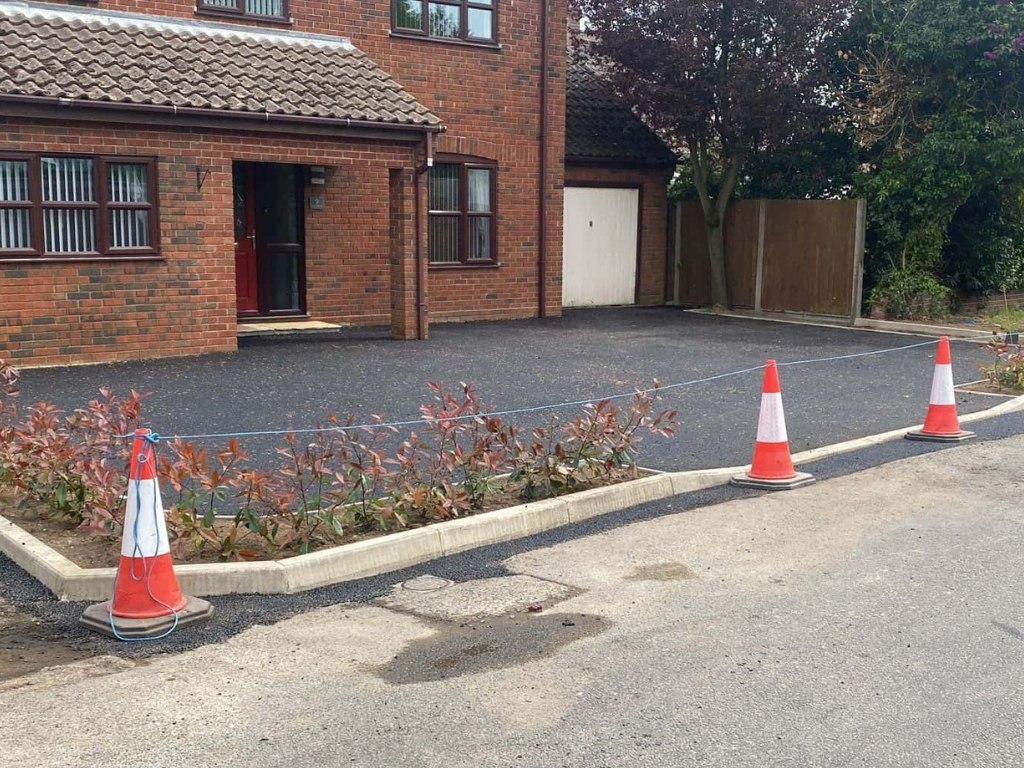
Is Tarmac the Right Choice for a Driveway That Gets Heavy Daily Use?
Understanding How Tarmac Performs Under Frequent Use
Tarmac is widely used for driveways because it creates a smooth, continuous surface capable of supporting regular vehicle movements. However, frequent use places greater demands on a driveway than occasional parking. The suitability of tarmac therefore depends on more than the surface material alone.
For properties in Banstead, Surrey, factors such as vehicle type, ground conditions, sub-base construction, drainage and driveway layout should all be assessed before installation. When these elements are correctly planned, tarmac can provide a practical surface for a busy household.
What Counts as Heavy Daily Use?
Heavy use does not necessarily mean large commercial vehicles. A domestic driveway can experience considerable pressure when several cars enter and leave throughout the day, delivery vehicles stop regularly or drivers repeatedly turn in the same area.
The greatest strain often occurs where vehicles:
- Enter and leave through a narrow access point
- Turn while stationary
- Park in the same position each day
- Travel close to unsupported edges
- Brake on a sloping section
- Remain parked for long periods
- Concentrate their weight over a small area
Understanding these movement patterns helps determine how the driveway should be designed and prepared.
Why Tarmac Suits Regular Vehicle Movements
A properly installed tarmac driveway forms a compact, level surface that works well for frequent access. Its relatively smooth finish allows cars to move and manoeuvre without displacing individual paving units or loose aggregate.
Other practical characteristics include:
- A consistent surface across larger areas
- Clearly defined parking and turning spaces
- Straightforward removal of leaves and debris
- Suitability for sloping or irregularly shaped driveways
- A firm surface for pedestrians, bicycles and bins
- Easy identification of cracks or depressions
Tarmac can also be installed around gentle curves and established features, making it adaptable to different property layouts.
Sub-Base Preparation Is Essential
The performance of a heavily used driveway depends heavily on the layers beneath the visible tarmac. If the ground is weak or the sub-base is too shallow, repeated vehicle loading can lead to settlement, depressions and cracking.
Professional preparation may involve:
- Removing unsuitable existing material
- Excavating to an appropriate depth
- Assessing soft or unstable ground
- Installing a suitable sub-base
- Compacting the material in controlled layers
- Creating the correct finished levels
- Supporting vulnerable edges
The required preparation should reflect the ground conditions and expected traffic. Applying tarmac over an inadequate foundation will not correct movement beneath it.
Vehicle Weight Must Be Considered
Cars and lighter domestic vehicles impose different demands from vans, motorhomes or other heavier vehicles. Occasional access by a heavier vehicle may be manageable, but frequent loading should be considered when the driveway is designed.
The construction depth, supporting layers and surface specification may need to be adjusted where heavier vehicles regularly park or turn. This is one reason a standard approach cannot be applied to every driveway.
Drainage Affects Long-Term Performance
Standing water can gradually weaken the edges and supporting layers of a driveway. If moisture reaches the sub-base through cracks or poorly drained margins, repeated traffic can accelerate movement.
An effective design should direct water away from buildings and prevent it collecting in vehicle tracks or low points. This may require careful grading, drainage channels or adjustments to existing levels.
Before installation, the site should be checked for:
- Natural ground falls
- Areas where water currently gathers
- The relationship between the driveway and the property
- Changes in level near entrances
- Existing drainage features
- Potential run-off from surrounding surfaces
Drainage should form part of the initial design rather than being considered only after the surface has been laid.
Strong Edges Help Prevent Deterioration
The edges of a tarmac driveway can be vulnerable when vehicles repeatedly drive across or park close to them. Without adequate support, the surface may begin to crack or crumble at the margins.
Suitable kerbs, edging units or other restraints help contain the construction and define where vehicles should travel. A driveway should also be wide enough for normal manoeuvring without forcing tyres onto gardens, verges or unsupported areas.
Turning While Stationary Increases Surface Stress
Repeatedly turning the steering wheel while a vehicle is stationary concentrates pressure on a small area. This can gradually scuff or distort the surface, particularly during warmer conditions or in heavily used turning points.
Where possible, steering movements should be made while the vehicle is moving slowly. The driveway layout should provide enough space for practical manoeuvring without requiring excessive stationary turning.
Maintenance Still Matters
Tarmac requires relatively straightforward maintenance, but it should not be ignored. Leaves, soil and other debris should be cleared so that drainage routes remain open. Fuel, oil and other spills should also be addressed promptly because they can affect bituminous surfaces.
The driveway should be checked occasionally for:
- Fine cracks
- Depressions in parking areas
- Movement around drainage channels
- Crumbling or unsupported edges
- Water remaining after rainfall
- Damage around utility covers
- Localised surface scuffing
Early assessment can establish whether a minor defect requires attention or simply needs monitoring.
When Might Another Surface Be More Suitable?
Tarmac is not automatically the best choice for every heavily used driveway. A different surface may be preferable where a particular decorative appearance is the main priority or where the design requires individual colours and patterns.
The right choice should account for daily use, property style, maintenance expectations, ground conditions and the surrounding landscape. A professional site assessment can compare these requirements without assuming that one material is suitable for every location.
What Should Be Assessed Before Installation?
Before choosing tarmac for a busy driveway, it is sensible to consider:
- The number and type of vehicles
- How often vehicles enter and leave
- Regular parking positions
- Turning and braking areas
- Existing ground stability
- Driveway width and shape
- Edge support
- Surface gradients
- Water management
- Connections to paths and entrances
These details determine both whether tarmac is appropriate and how the driveway should be constructed.
Conclusion
Tarmac can be an effective choice for a driveway that receives heavy daily use. Its smooth, compacted surface supports regular vehicle movements and provides practical access for the wider household. Its success, however, relies on a stable sub-base, effective drainage, supported edges and a layout designed around actual vehicle movements.
If you are considering a new tarmac driveway in Banstead, NS Driveways Banstead can assess the site and determine whether this surface suits the expected level of use. Careful planning provides a more dependable result without recommending work that the property does not need.
Call us on: 01737 926 997
Click here to find out more about NS Driveways Banstead
Click here to complete our contact form and see how we can help with your driveway needs.